

No More Pain
Use “Discomfort” InsteadNo More Pain

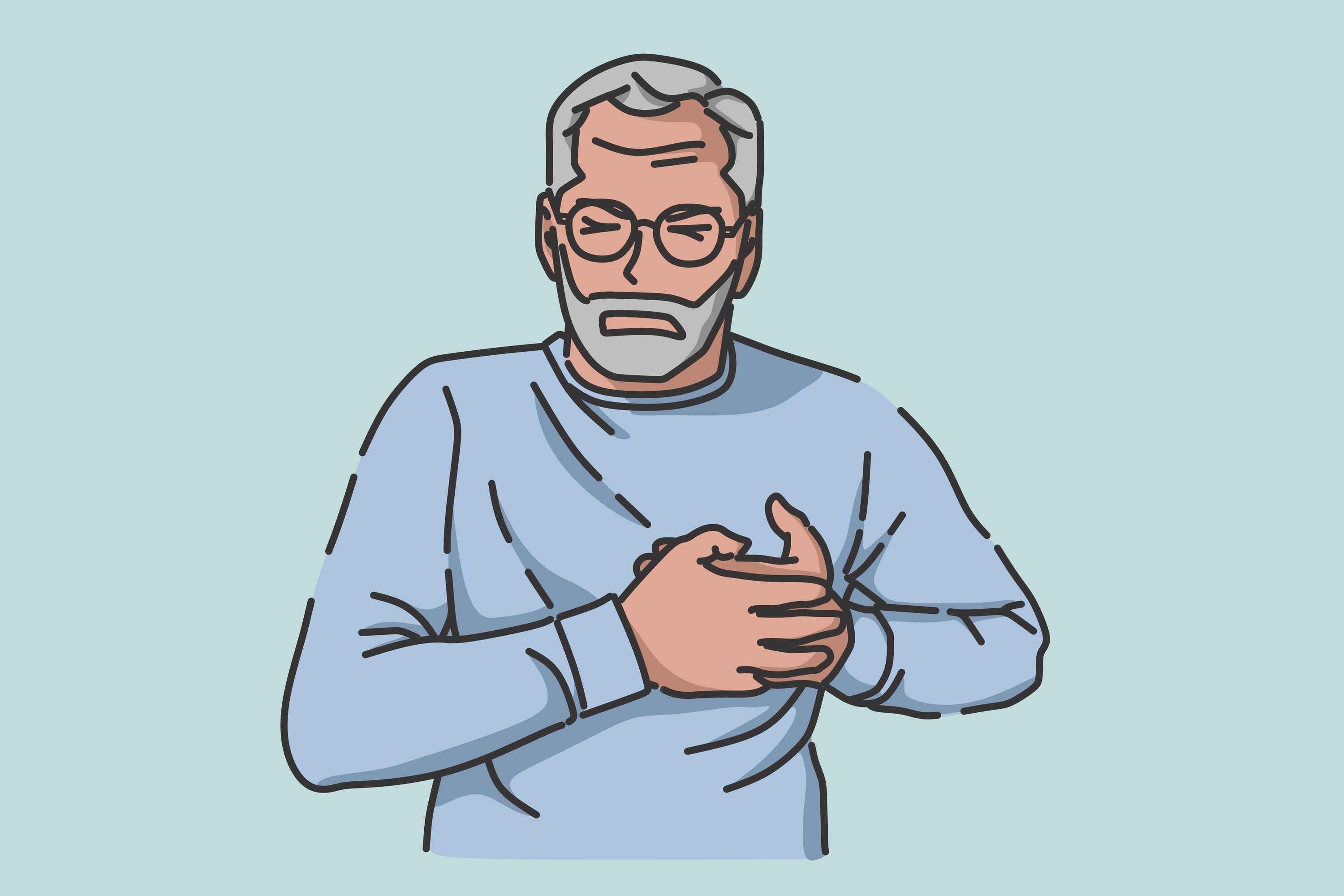
Avoid using the term “chest pain” when interviewing patients about cardiac disease. Use the term “chest discomfort” instead.
Many patients with symptomatic ischemia deny that they have pain. Frequently a resident or fellow tells me that a patient has no “chest pain,” implying no ischemic symptoms, but the patient admits to “chest discomfort” when I ask using that term. Classic angina, and even myocardial infarctions, are often not described as pain, but as discomfort. So, avoid “chest pain” when taking a medical history and use the word “discomfort” instead.
Also, no moaning, please. Patients with acute cardiac ischemia and an infarct rarely moan and rarely thrash around the bed. That does not mean that they never moan and thrash, but it is distinctly unusual. So, if someone is moaning or writhing from the discomfort, make sure you consider aortic dissection and non-cardiac causes. This is true even when they have mildly elevated cardiac enzymes. Cardiac troponin I is elevated in about 25% of patients with ascending aortic dissection for unclear reasons, but possibly from demand ischemia. (1) Creatine kinase (CK) is also often elevated in aortic dissections.
Other non-cardiac conditions can also cause a troponin leak possibly due to demand ischemia. These include pulmonary embolism, renal failure, pneumonia, sepsis, and others.(2) Clinicians often fail to consider these other conditions once they know of the elevated troponin, but it is always important to keep a differential diagnosis and to avoid making the assumption that chest discomfort with an elevated troponin always means that the heart is the primary culprit.
So, what are the Rules?
· Use the term “chest discomfort” when inquiring about cardiac ischemic pain. It’s more inclusive.
· Don’t assume that any patient, especially a moaning and/or writhing patient, has cardiac pain just because the CK or troponin is elevated.
· Always make a differential diagnosis list and avoid making a diagnosis on one or two data points alone.
References:
Tuomo J Ilva, TJ, et al. The etiology and prognostic significance of cardiac troponin I elevation in unselected emergency department patients. Emerg Med. 2010 Jan;38(1):1-5. PMID: 18687565.
Eric Bonnefoy 1, Patrick Godon, Gilbert Kirkorian, Sylvie Chabaud, Paul Touboul. Significance of serum troponin I elevation in patients with acute aortic dissection of the ascending aorta. Acta Cardiol. 2005 Apr;60(2):165-70. PMID: 15887472
#chest pain #pain #heart #angina #heart attack
Thank you Dr. Thompson
Just another average "very well done" for you. HRS, MD, FACC